
Urban Life at Palenque, Chiapas Mexico
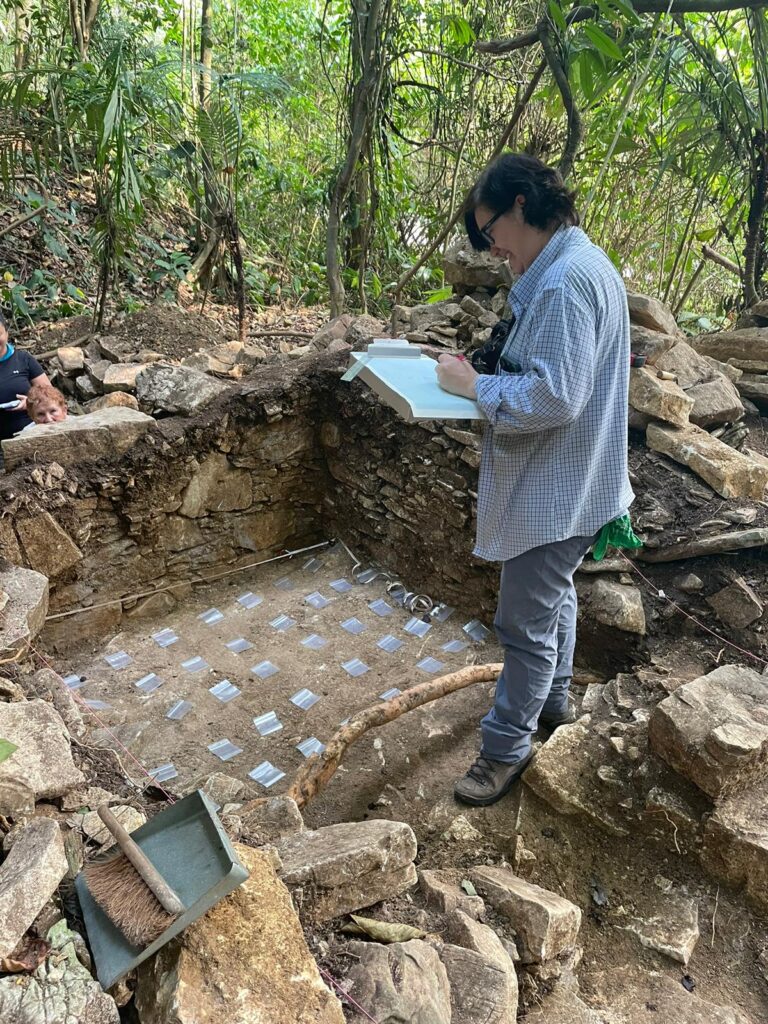
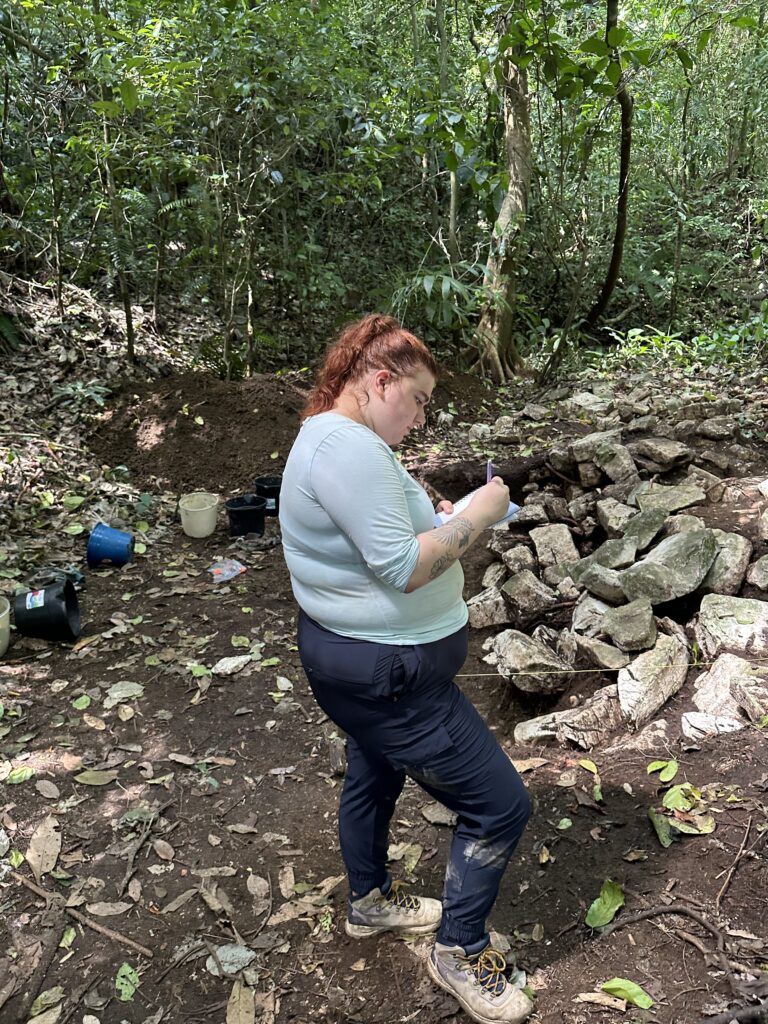
Since 2016, Dr. Lisa Johnson has been working at the ancient Maya city of Palenque in Chiapas, Mexico. Excavations have primarily focused on the residential groups of the city in order to learn more about the organization of neighborhoods, the practices of mausoleum burial traditions for select ancestral dead and the daily activities that occurred in and around the homes of the Maya living in the city during the Classic Period (400 – 800 CE). The most recent investigations, under a study titled “Urban Life at Palenque” is a multi-university collaboration with an international team with researchers from the University of Rome, Sapienza, the Universidad Nacional Autonoma de Mexico, in Mexico City, the University of California, Berkeley and the University of Nevada, Las Vegas. Using methods such as soil chemistry, micromorphology, flotation and screening, the team hopes to recover traces of activity areas and single events of deposition. This microarchaeological approach enables a consideration of “lived time”. The team also uses 3-D imagery and liDAR to produce detailed and interactive images of the landscape and city of Palenque. With photogrammetry, the team is able to produce 3-D images of individual structures and excavations. Dr. Johnson and her students are presently analyzing and cataloguing the thousands of flaked stone artifacts recovered from two years of excavations. This work is revealing the diversity in household crafting and household economies.
Featured Student Research
Dayanira “Dee” Lopez, Ph.D. 2026
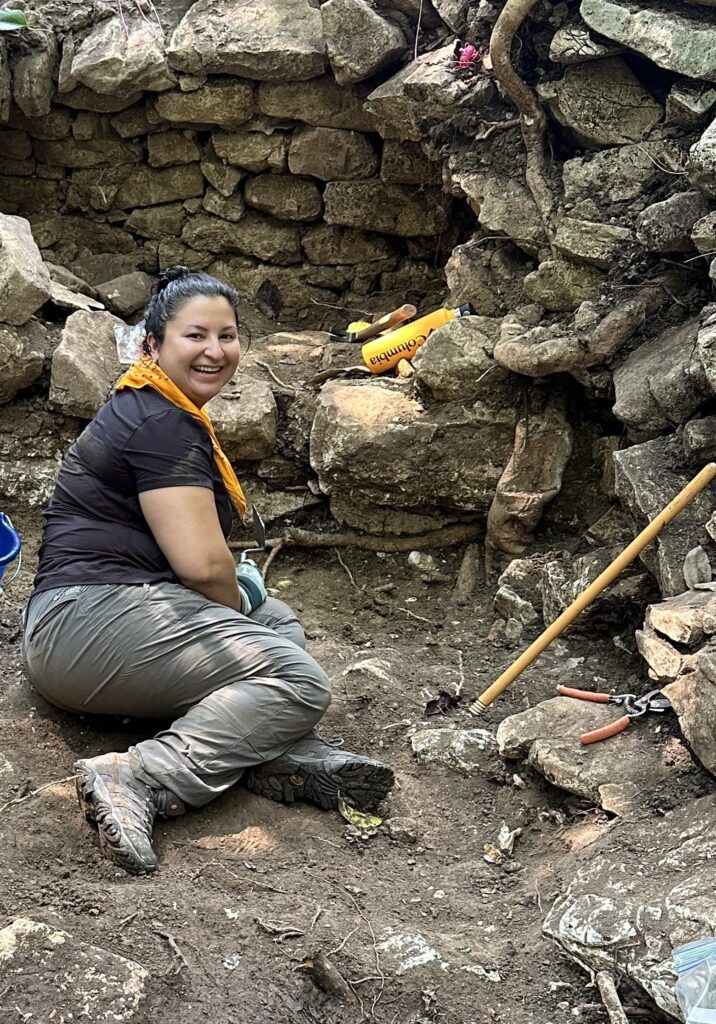
“Impairment and Disability in Mesoamerica: Evaluation and Interpretation among the Maya of Palenque”
The study of impairment and disability is of growing interest in bioarchaeology and biological anthropology, with limited existing literature focusing on prehistoric collection of Mesoamerica. This project will largely draw upon disability theory to explore how we might (differently) interpret the lived experience of the ancient Maya who may have been socially labeled as impaired and/or disabled. Skeletally, all individuals excavated from the residential Group IV cemetery of Palenque, in Chiapas, Mexico, will be evaluated for any evidence of markers of developmental defects, pathology, physical injury or stress, etc., that will contribute to our understanding of the overall health of this population, focusing on how the lived experience of an individual with an impairment may have changed physically in comparison to individuals with no evidence of impairment.
Alexandra Castillo, Graduate Student
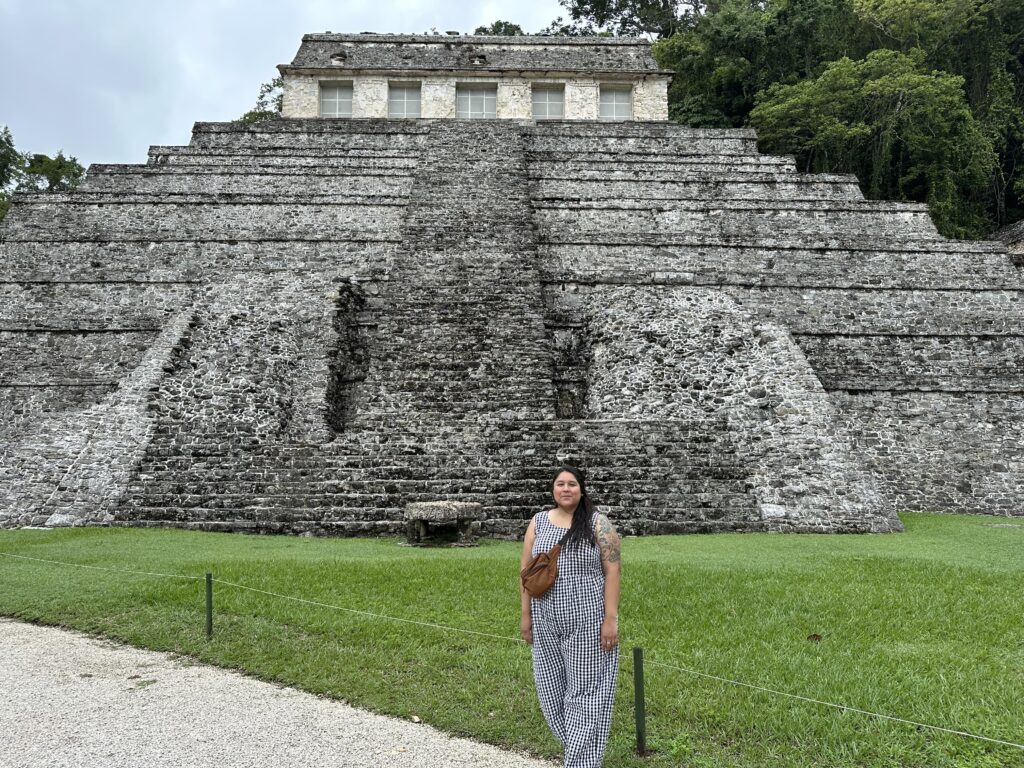
“A Technical Analysis of Ground Stone in a Classic Period Neighborhood of Palenque, Mexico” M.A. 2026
This study aims to shift the perception of ground stone by recognizing these tools as significant components of Maya life that actively shaped daily experiences. Adopting theoretical frameworks of feminist theory, household archaeology, and object itineraries, Alex reframes ground stone not just as a passive domestic tool but as an active object central to household production, social, ritual, and community identity.
Alexa Vitale, Undergraduate (Spring 2026)
“Preliminary Analysis of Chert Tools from a Domestic Workshop in the Classic Period Maya City of Palenque”
This is a preliminary analysis of 93 chert drills recovered from a hypothesized workshop
context in the ancient Maya city of Palenque. The Classic-Period polity was active from about
AD 450-830 in the Maya Lowlands of modern-day Chiapas, Mexico. The argued workshop,
structure J57, is in a residential neighborhood, and a radiocarbon date recovered from the deepest
level in the midden (AD 350) suggests that the earliest use of the area was in the Early Classic
period. Excavations beginning in 2016 showed that structure J57 was an anomaly for the
neighborhood due to the high number of recovered flaked stones. This research looks at a sample
of these recovered lithic artifacts, the chert tools. Looking at the tools used can help us
understand if there was a standardization in how the drills were used and retouched. Therefore,
trying to see if they were producing multiple types of products or just one. This analysis was
performed using the analysis key from Lucas R. Martindale Johnson, who analyzed chert tools
from another Maya city, Caracol, Belize. Size measurements, bit morphology, retouch angles,
and edge angles are all attributes recorded during the analysis. The analysis is designed to
determine if patterns of retouch and morphology indicate standardization that is consistent with
workshop contexts or variability that is indicative of general household production. The number
of tools recovered is itself evidence to show that some households intensified their crafting.
Ayat Azzah, Undergraduate (Spring 2026)
“Functionality of Notched Obsidian Blade Fragments”

Ethan Williams, Undergraduate (Anthro B.A. 2024)
“Analysis of Obsidian Consumption in a Late Classic Maya Household, Palenque Chiapas Mexico (600 – 800 CE) at Palenque, Chiapas Mexico” (2023-2024)
Ethan conducted a quantitative analysis of obsidian consumption in a single residential group at the Maya city of Palenque. Preliminary counts and sizes of the obsidian that was found in a midden suggest that this particular household had ample access to exotic goods but were not themselves, crafting in obsidian.
Maya Lab Research Hub
The Maya Lab has been gathering years of excavation and analyses related data. Collaborators with access can visit the Maya Lab Research Hub.
