
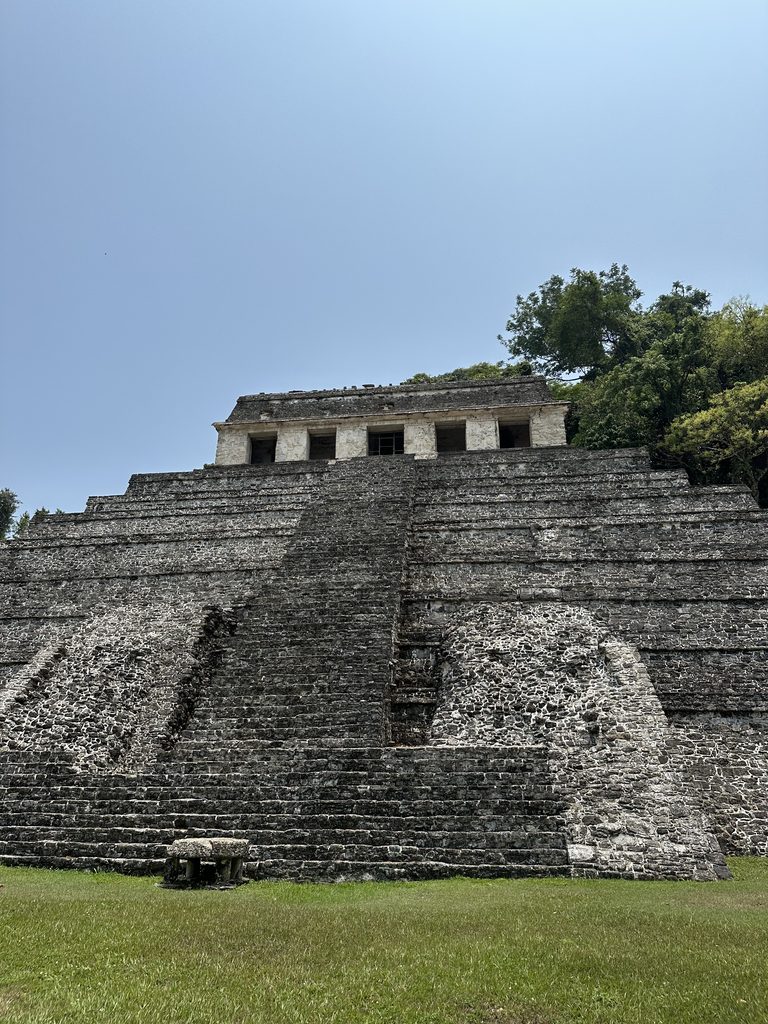
Welcome to the Maya city of Palenque, located in Chiapas, Mexico. Palenque, or Lakam’ha (“Big Water”) was a bustling city during the 5th – 9th centuries. While relatively small (under 3km²) it was one of the densest cities by the 700’s with more than 1500 mapped buildings. Master stone masons and architects built impressive stepped pyramids and a palace compound with a tower. Maya artists sculpted elaborate scenes of ritual dances, political life and patron deities in the fine grained limestone found nearby to decorate the buildings. Built on the side of a mountain, the city had multiple sources of flowing water running through its main plazas and through its residential sectors. Impressive infrastructure including stone built aqueducts and retaining walls were built to manage the water. Some of the city’s wealthiest residents lived in multi-storied compounds and participated in shared ritual traditions, venerating powerful ancestors, burning incense and hosting elaborate feasts. The extensive hieroglyphic record found carved in the stone artwork, incense burner stands and painted on pottery reflect a powerful kingdom engaged in regional politics. By 800 CE, the city appears to have been largely abandoned, exact reasons are still unclear, but smaller communities continued to live in outlying areas. While local Maya communities always knew about the ruined city in the mountains, Europeans were made aware of Palenque as early as the 1770’s when Spanish officials were sent to document the site. Since that time, numerous explorers, antiquarians and more recently, academic archaeologists and epigraphers have worked tirelessly to study the city and the communities that lived there.
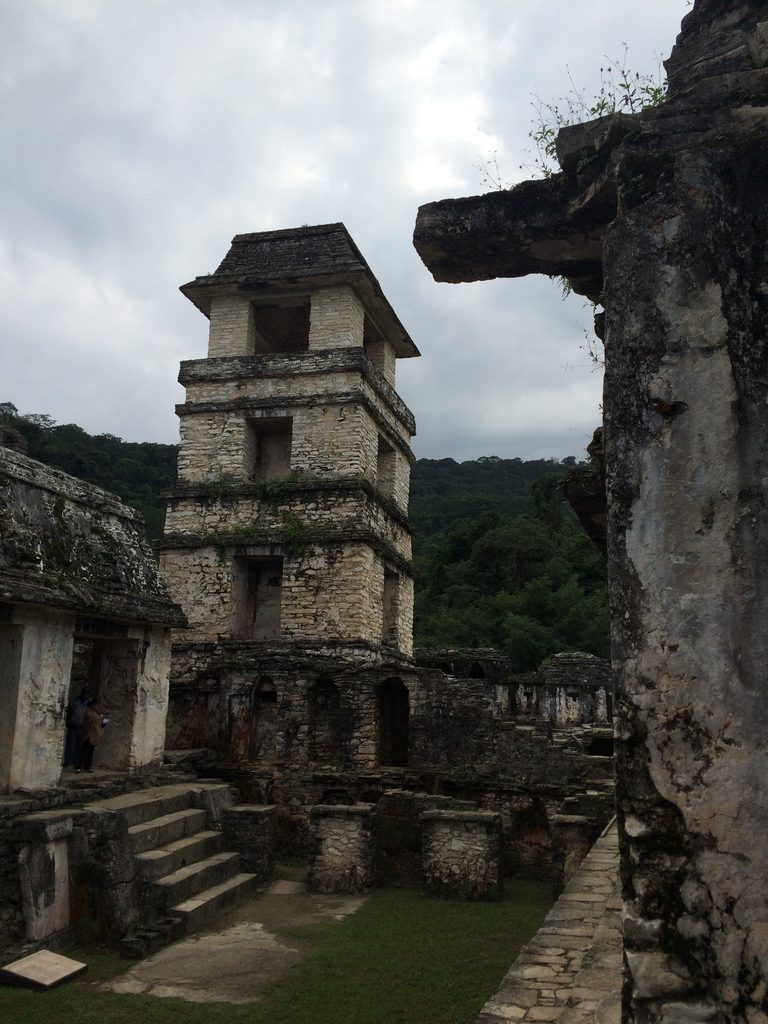
Inside the palace compound, a private patio is seen in the foreground and the only documented tower built in a Maya city is visible in the background (photo L. Johnson 2016)
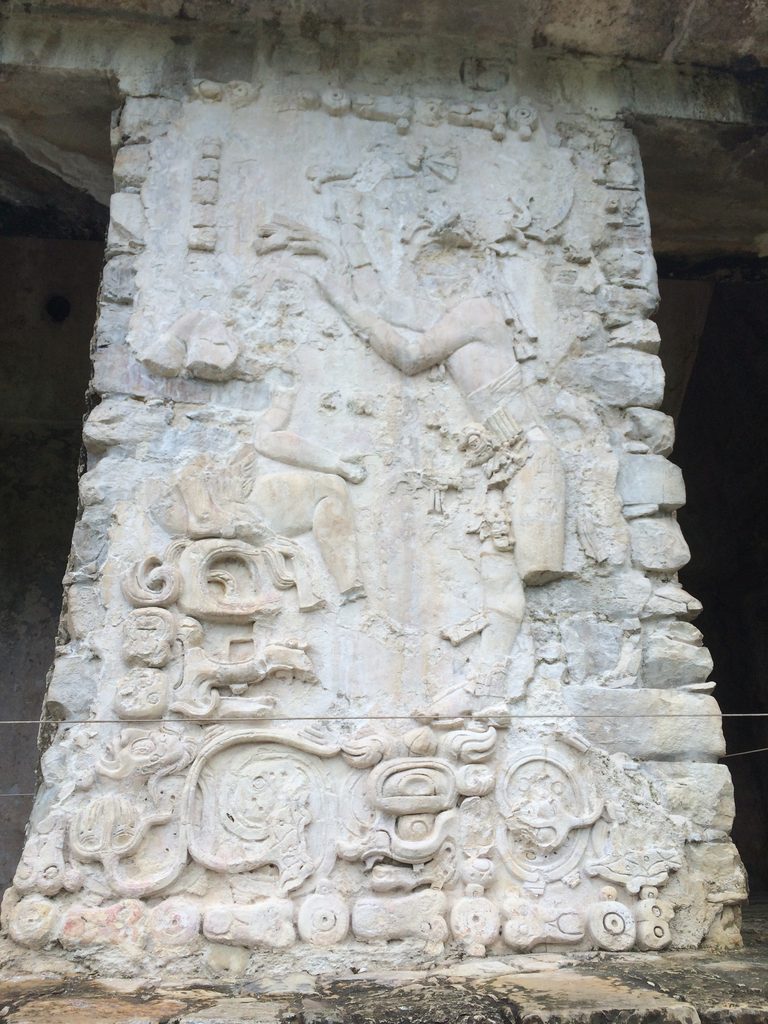
The columns of the palace are decorated with stucco artwork (photo: L Johnson 2016)
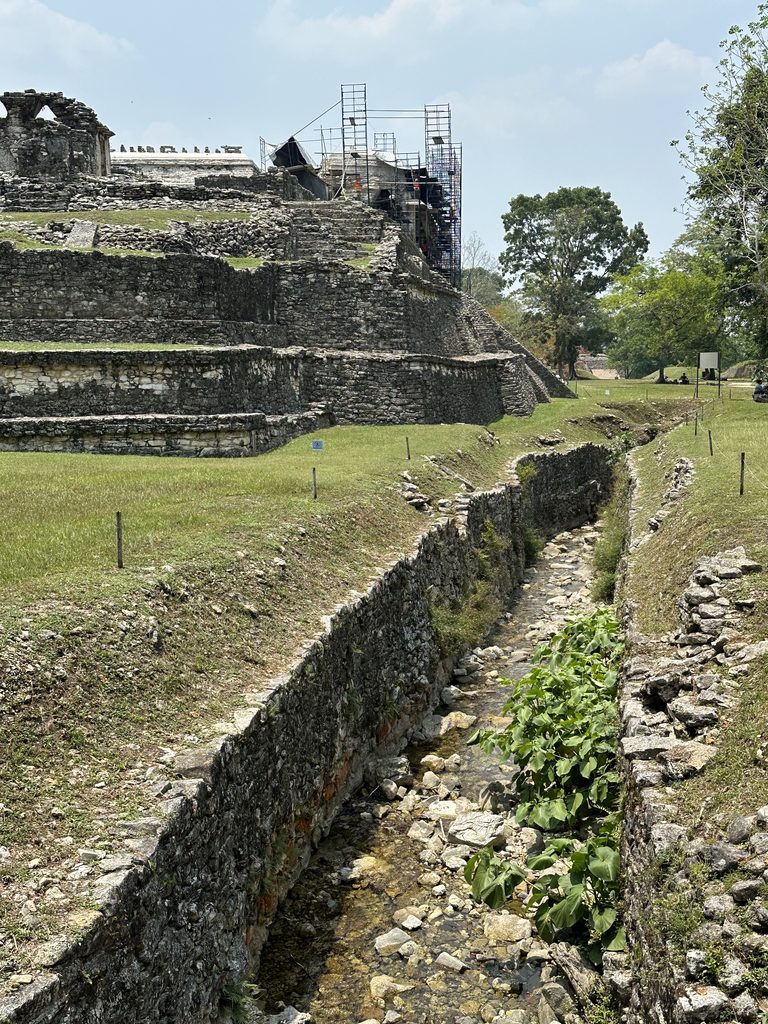
Remains of a stone aqueduct running through the central plaza, the palace is visible on the left (photo: L. Johnson 2022)
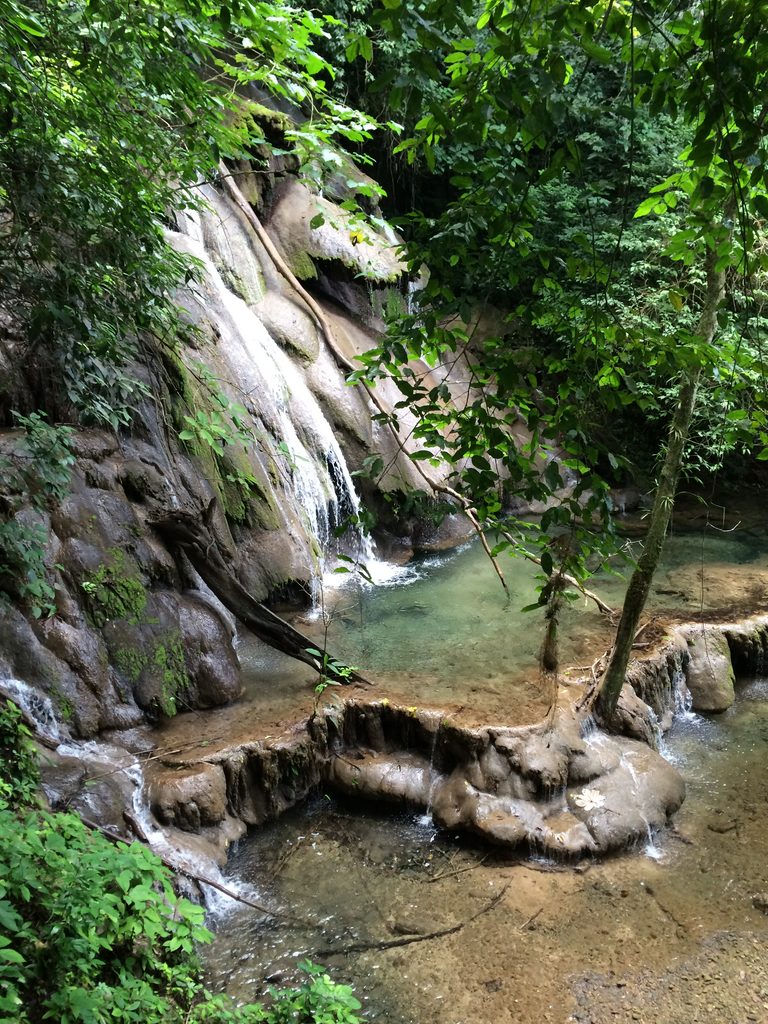
Waterfalls are found throughout the city (photo: L. Johnson 2016)
Take a virtual tour of the city and learn more!
TOUR PALENQUE
